
Farm Bill 2014 & Farm Bill 2018 Hemp — How Hemp Returned
Section 7606 reopened the fields. The 2018 Farm Bill removed hemp from the Controlled Substances Act entirely. For the first time since 1937, American farmers could grow hemp without federal exposure.
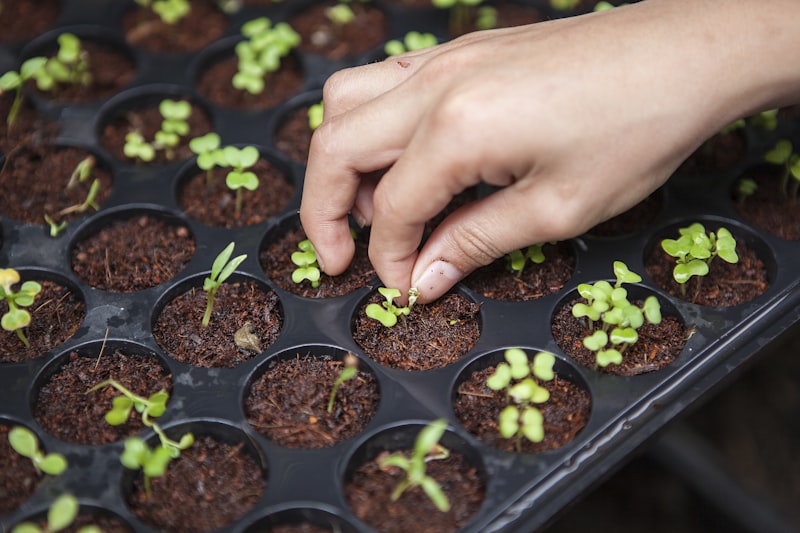
For 81 years — from the Marihuana Tax Act of 1937 to the Agriculture Improvement Act of 2018 — American farmers could not legally grow hemp without risking federal prosecution. The plant that colonial legislatures had required farmers to cultivate was classified alongside heroin. Two Farm Bills, four years apart, ended that prohibition in stages.
The 2014 Farm Bill: research pilots
Section 7606 of the Agricultural Act of 2014
The 2014 Farm Bill included Section 7606, which authorized state departments of agriculture and universities to grow hemp under state-licensed research pilot programs. For the first time since prohibition, legal hemp could grow on American soil — but only for research, and only in states that passed enabling legislation.
Section 7606 was deliberately narrow. It did not legalize commercial hemp farming. It created a legal pathway for research pilots, allowing states to define and regulate hemp cultivation within their borders. The section introduced the definition that would become standard: hemp is Cannabis sativa with a delta-9 THC concentration of 0.3 percent or less on a dry weight basis.
The 0.3 percent threshold was not based on pharmacological science — it was a regulatory convenience, a bright line that distinguished "hemp" from "marijuana" for legal purposes. That arbitrary line would later create a multi-billion-dollar loophole.
The 2018 Farm Bill: full legalization
Agriculture Improvement Act of 2018 (Pub. L. 115-334)
The 2018 Farm Bill removed hemp — defined as Cannabis sativa with ≤0.3% delta-9 THC on a dry weight basis — from the Controlled Substances Act entirely. Hemp was reclassified as an agricultural commodity. The USDA was directed to establish a federal hemp production program with state implementation plans.
The 2018 Farm Bill did what Section 7606 could not: it removed hemp from Schedule I of the Controlled Substances Act. This was not a pilot program or a research authorization. It was full federal legalization of hemp cultivation, processing, and sale. American farmers could grow hemp commercially for the first time since the Tax Act of 1937.
The law established a USDA hemp program under which states could submit regulatory plans for approval. Farmers operating under approved state plans would face no federal criminal exposure for growing a plant that, 81 years earlier, Congress had placed in the same legal category as heroin.
What the 2018 law actually did
The Agriculture Improvement Act of 2018 accomplished several specific things:
- Removed hemp from the CSA. Cannabis sativa with ≤0.3% delta-9 THC was no longer a controlled substance under federal law.
- Created a federal regulatory framework. The USDA was directed to establish rules for hemp production, including testing, licensing, and enforcement.
- Enabled state programs. States could submit plans to the USDA for hemp regulation, or operate under the federal plan.
- Preserved existing authority. The FDA retained authority over hemp-derived products marketed with health claims. The DEA retained authority over cannabis exceeding the 0.3% threshold.
The definition problem
The 2018 law defined hemp by a single metric: delta-9 THC concentration at or below 0.3 percent on a dry weight basis. This definition measured only one cannabinoid — delta-9 THC — and measured it in only one form. It did not account for THCA (tetrahydrocannabinolic acid), which converts to delta-9 THC when heated. It did not account for delta-8 THC, a psychoactive isomer that can be synthesized from CBD.
This was a regulatory definition written for an agricultural commodity. It was not written to anticipate an industry of chemists who would exploit every gap in the language. The consequences of that gap are covered in The Loophole.
Historical significance
The 2018 Farm Bill is one of the most consequential pieces of cannabis legislation in American history. It did not legalize marijuana — that remains federally prohibited. But it severed the legal link between industrial hemp and psychoactive cannabis that the Marihuana Tax Act had created in 1937. For the first time in 81 years, American farmers could grow Cannabis sativa without federal criminal exposure.
The irony is considerable. The same Congress that maintained marijuana as a Schedule I substance — defined as having "no currently accepted medical use" and "a high potential for abuse" — legalized the same species of plant based on a single chemical threshold. The policy distinction between legal hemp and illegal marijuana is a line drawn at 0.3 percent delta-9 THC. Everything on one side of that line is an agricultural commodity. Everything on the other side is a federal felony.
For in-depth cannabis education, dosing guides, safety information, and research summaries, visit our partner site TryCannabis.org