
Fitz Hugh Ludlow (1836–1870) — The Hasheesh Eater
Six cents for Tilden's Extract at a Poughkeepsie pharmacy. The Hasheesh Eater at 21. Mark Twain's circle. Cannabis addiction, then opium. Dead of tuberculosis the day after his 34th birthday.
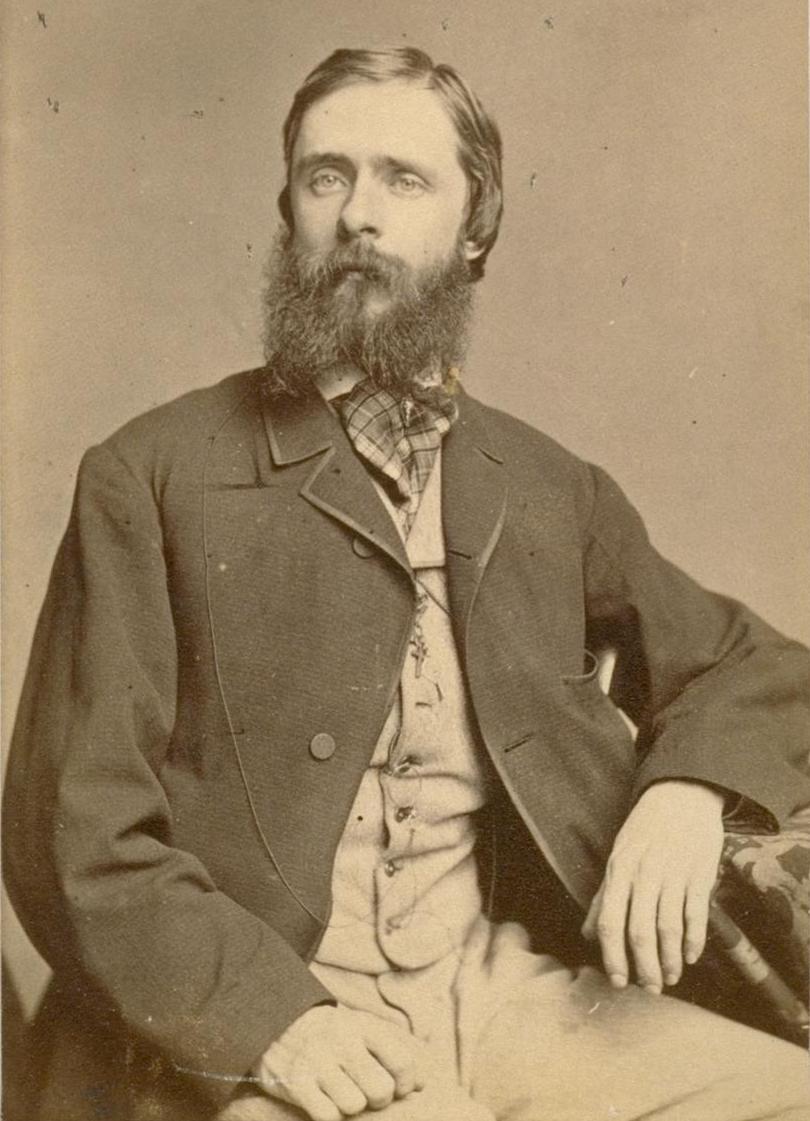
Born in New York City
Fitz Hugh Ludlow is born in New York City, the son of an abolitionist minister. The family's moral earnestness will contrast sharply with the son's literary career.
Fitz Hugh Ludlow was the first American psychonaut — the first writer in the United States to produce a sustained literary account of drug-altered consciousness. He was 16 when he first tried cannabis. He was 21 when he published the book that would define his brief life. He was dead at 34.
Tilden's Extract
Ludlow's introduction to cannabis came through the pharmacy counter. At 16, while living in Poughkeepsie, New York, he purchased Tilden's Extract of Cannabis Indica — a commercially available cannabis tincture sold by the Tilden Company. The product was legal, widely available, and unremarkable by the standards of mid-19th-century pharmacy, when cannabis preparations were standard items in the materia medica.
What was remarkable was the intensity of Ludlow's response and his determination to document it. He began systematically experimenting with the extract, taking notes on his experiences with the precision of a self-appointed research subject.
The Hasheesh Eater
<em>The Hasheesh Eater</em> published
Ludlow publishes The Hasheesh Eater: Being Passages from the Life of a Pythagorean at the age of 20 or 21. The book is the first American literary work devoted to cannabis intoxication — a sustained, detailed account of hashish visions, time distortion, and psychological transformation.
The book drew heavily on Thomas De Quincey's Confessions of an English Opium-Eater (1821), which had established the template for literary drug autobiography. Ludlow translated De Quincey's opium romanticism into the cannabis register — substituting hashish visions for opium dreams while maintaining the Romantic framework of intoxication as a portal to transcendent experience.
The Hasheesh Eater is not a clinical document. It is a literary performance — extravagant, hallucinatory, and self-consciously literary in a way that reflected the tastes of mid-19th-century American letters. The book describes cannabis-induced experiences of time dilation, synesthesia, paranoia, and euphoria with a specificity that later psychonauts would recognize and an ornamental prose style that later readers would find exhausting.
Literary career
The book's publication brought Ludlow into New York's literary circles. He wrote for Harper's Magazine and The Atlantic Monthly — the most prestigious periodicals of the era. He moved in the same circles as Mark Twain and Bret Harte. In 1863, he joined Albert Bierstadt on a Western expedition — the painter's landscape journeys that produced some of the most famous images of the American West.
Ludlow's career demonstrated that a drug autobiography could serve as a literary credential in mid-19th-century America. The cultural distance between his era and the 20th century is enormous: Ludlow wrote openly about cannabis intoxication in the nation's most respected magazines without legal consequence or social ruin. Cannabis was a pharmaceutical product, not a criminal substance.
Addiction and decline
Ludlow's cannabis use became compulsive. He recognized the addiction — The Hasheesh Eater itself describes the difficulty of stopping — and eventually moved to opium, which was also freely available. The progression from cannabis to opium was not a "gateway" in the 20th-century propaganda sense; it was a 19th-century pattern of self-medication in an era when both drugs were legal, unregulated, and sold over the counter.
Death
Dies of tuberculosis in Geneva, Switzerland
Fitz Hugh Ludlow dies in Geneva, Switzerland, one day after his 34th birthday. The cause is tuberculosis. His literary career had lasted barely fifteen years. The Hasheesh Eater is now in the public domain.
Ludlow's death at 34 cut short a career that had begun with extraordinary promise. He left behind a body of journalism and literary criticism, but his legacy rests entirely on the book he published at 21 — a first-person account of cannabis consciousness written at a time when the drug was a pharmacy item and the experience could be described without legal risk.
Legacy
The Hasheesh Eater occupies a unique position in American letters. It is the founding text of American drug literature — a genre that would eventually include William Burroughs, Allen Ginsberg, Hunter S. Thompson, and countless others. But Ludlow wrote in an era when cannabis was legal, commercially available, and culturally unremarkable as a pharmaceutical product. His book is a reminder that the criminalization of cannabis is historically recent — and that the substance he bought for six cents at a Poughkeepsie pharmacy would, within a century, carry penalties of decades in prison.
The book is in the public domain and freely available. Whatever its literary limitations, it remains the first American attempt to describe the cannabis experience in sustained, serious prose — written by a 21-year-old who would not live to see his 35th birthday.
For in-depth cannabis education, dosing guides, safety information, and research summaries, visit our partner site TryCannabis.org