
The Gore Files — Anslinger's Propaganda Machine
A family murdered in Tampa. A lunacy petition filed a year earlier. A Bureau that needed horror stories. And a set of viral quotes that the archivists at Penn State say they cannot verify.
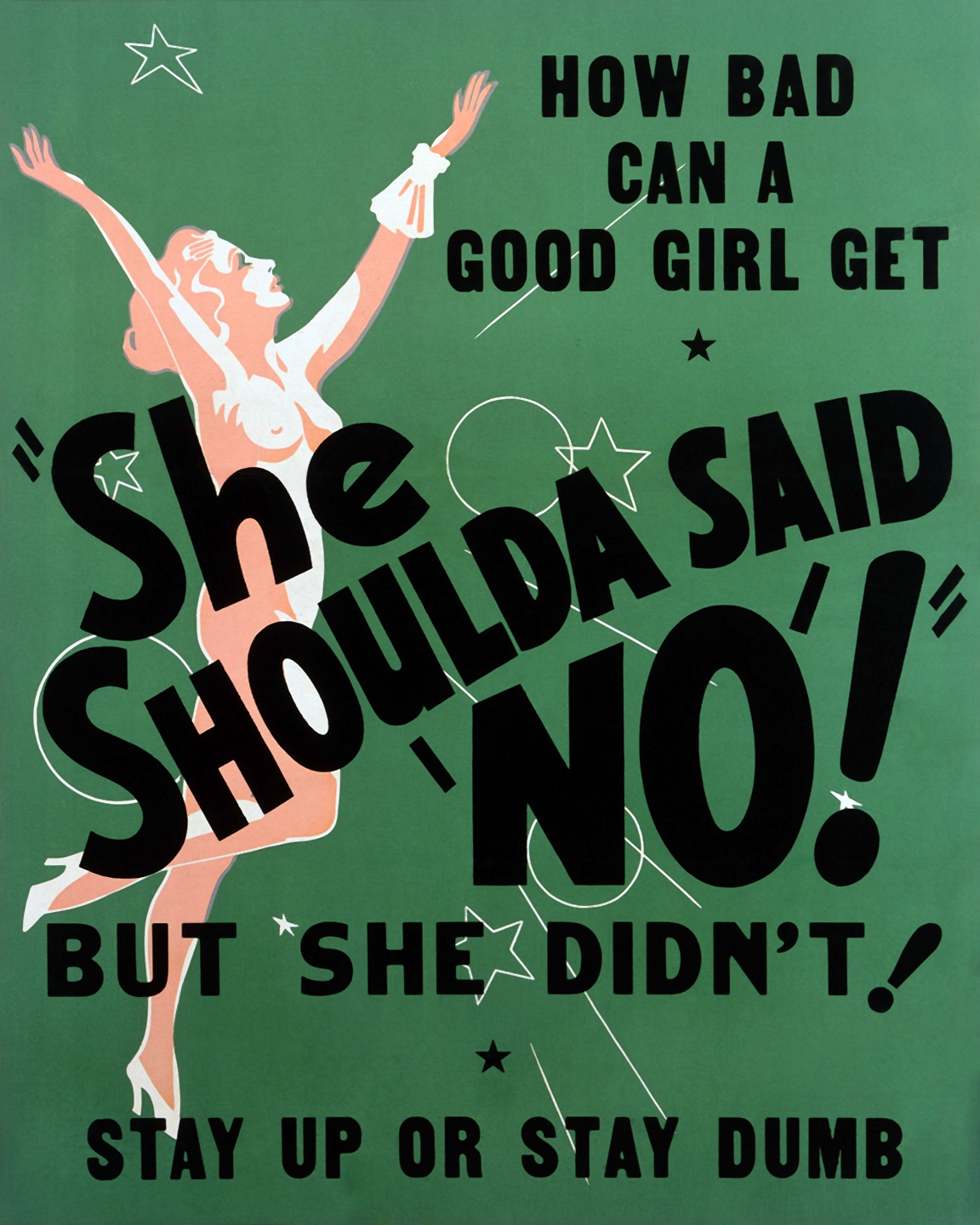
The "Gore Files" were Harry Anslinger's most potent propaganda tool — a collection of violent-crime case files that the Federal Bureau of Narcotics attributed to marijuana use. Compiled in the mid-1930s, they provided the emotional foundation for the campaign that produced the Marihuana Tax Act of 1937. The files are held today in the Anslinger Papers at Penn State University's Eberly Family Special Collections Library (Collection 1875). They tell a story about propaganda, not about pharmacology.
The Victor Licata case
The centerpiece of the Gore Files was the case of Victor Licata, a 21-year-old Tampa man who murdered his parents and three siblings on the night of October 16–17, 1933. Licata attacked his family with an axe while they slept. The case was horrific, and Anslinger seized on it.
The Licata murders, Tampa, Florida
Victor Licata, age 21, murders his parents and three siblings with an axe. Local press initially mentions marijuana use. Anslinger includes the case in the Gore Files and uses it in the 1934 League of Nations report and the 1937 congressional hearings.
Anslinger cited the Licata case in at least two major forums: the 1934 US report to the League of Nations Advisory Committee on Traffic in Opium, and the 1937 congressional hearings on the Marihuana Tax Act (hearing transcript, p. 23). In both, the case was presented as evidence that marijuana caused homicidal psychosis.
What Anslinger did not mention — and what subsequent researchers uncovered — destroys the case as evidence of marijuana's effects:
- Prior lunacy petition: A lunacy petition had been filed for Victor Licata a full year before the murders. His mental illness was documented before the crime, not caused by it.
- Family history: The Licata family had a documented history of mental illness spanning multiple members.
- Diagnosis: Licata was diagnosed with criminal insanity that was "likely inherited" — a clinical assessment that had nothing to do with marijuana.
- Outcome: Licata was committed to the Florida State Hospital for the Insane, where he hanged himself in 1950.
The Licata case was not evidence that marijuana caused violence. It was evidence that Anslinger needed horror stories and was willing to use a case of documented inherited mental illness to get them.
The planted press
The Gore Files were not merely passive collections of newspaper clippings. The Bureau actively cultivated press coverage and then cited that coverage as independent evidence. Sociologist Howard Becker, in his landmark study of marijuana criminalization, documented the circularity:
Ten of seventeen articles about marijuana that appeared in popular magazines between 1937 and 1939 acknowledged the assistance of the Federal Bureau of Narcotics in their preparation.
Howard Becker, <em>Outsiders: Studies in the Sociology of Deviance</em> (1963)
The process worked like this: the Bureau supplied reporters with case files, statistics, and quotes. The reporters published stories. The Bureau then cited those stories as evidence of public concern, which justified expanded enforcement, which generated more case files. It was a self-reinforcing cycle of propaganda, and it worked.
What Anslinger actually said
The internet is saturated with quotes attributed to Anslinger — lurid, racist pronouncements that circulate endlessly in cannabis-reform media. Some are real. Some cannot be verified. The distinction matters.
Verified statements (sourced to primary documents)
How many murders, suicides, robberies, criminal assaults, holdups, burglaries and deeds of maniacal insanity it causes each year, especially among the young, can only be conjectured... No one knows, when he places a marijuana cigarette to his lips, whether he will become a joyous reveler in a musical heaven, a ## fiend, or a murderer.
Harry Anslinger, "Marijuana: Assassin of Youth," <em>American Magazine</em>, July 1937, p. 18
Anslinger's American Magazine article, co-written with Courtney Ryley Cooper and published in July 1937 — the same month the Tax Act moved through Congress — was his most widely read piece of propaganda. A condensed version appeared in Reader's Digest in February 1938, reaching millions of additional readers. In it, he invoked the medieval legend of the Assassins (p. 18) and called marijuana "entirely the monster Hyde" (p. 19).
In the year 1090, there was founded in Persia the religious and military order of the Assassins... The members were confirmed users of hashish, or marihuana, and it is from the Arabic "hashshashin" that we have the English word "assassin."
Harry Anslinger, "Marijuana: Assassin of Youth," <em>American Magazine</em>, July 1937, p. 18
A December 4, 1934 internal memo held at the FDR Presidential Library contains Anslinger's use of a racial slur in official correspondence — documented evidence of the racial attitudes that shaped Bureau policy.
Unverified quotes (widely circulated but unsourced)
Two quotes attributed to Anslinger circulate so widely that they have become canonical in cannabis-reform culture. Neither can be verified in primary documents.
Why the distinction matters
Anslinger's documented racism does not need embellishment. The verified record — the American Magazine article, the League of Nations reports, the 1934 memo with a racial slur, the racialized case files — is damning on its own terms. Fabricated or unverifiable quotes do not strengthen the case against Anslinger; they weaken it by giving defenders grounds to dismiss legitimate criticism as myth.
The Gore Files themselves are the real story. They demonstrate how a federal agency manufactured a drug panic by compiling misleading case studies, planting them with cooperative journalists, and then citing the resulting press coverage as evidence of the very crisis the Bureau had created. That documented process — not a set of viral quotes that no archivist can locate — is what makes the Gore Files historically significant.
For in-depth cannabis education, dosing guides, safety information, and research summaries, visit our partner site TryCannabis.org