
Cannabis in Renaissance Europe — Hemp for Empire
Fifty to one hundred tons of hemp per warship, replaced every one to two years. Renaissance Europe did not care about getting high — it cared about controlling the seas.
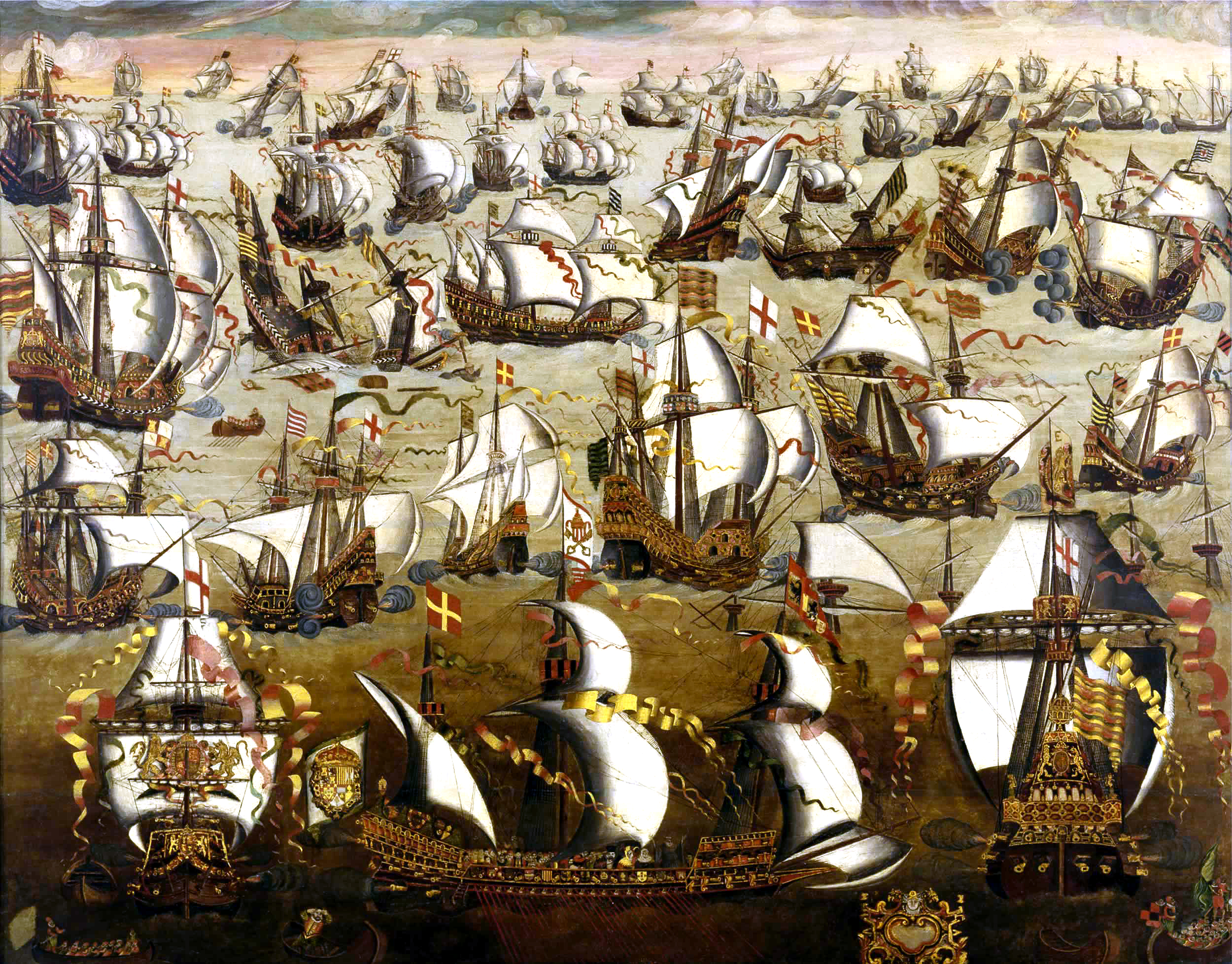
In Renaissance and early modern Europe, cannabis was not medicine, sacrament, or intoxicant. It was strategic material. Naval supremacy — the foundation of colonial empire — depended on hemp rope, hemp canvas, and hemp caulking. A single warship consumed 50 to 100 tons of hemp rigging and sailcloth, and that rigging had to be replaced every one to two years. Whoever controlled the hemp supply controlled the navy. Whoever controlled the navy controlled global trade.
The etymology of empire
The word "canvas" derives from cannabis — through the Anglo-French canevaz, from the Latin. This is not a piece of stoner trivia. It is a linguistic fossil preserving the material reality of European maritime civilization: the sails that carried European empires across the world were made from cannabis hemp. Every square foot of canvas on every ship in every European fleet was woven from the fibers of Cannabis sativa.
Henry VIII's hemp mandate
Henry VIII mandates hemp cultivation
The statute 24 Henry VIII c. 4 required every English landowner with sixty or more acres of tillable land to sow one-quarter acre of hemp. Non-compliance was punishable by fine. The mandate was driven by naval strategy: England needed domestic hemp supplies to reduce dependence on Baltic imports for its expanding fleet.
Henry VIII's hemp law was not agricultural policy. It was defense procurement. England in 1533 was a second-tier naval power, dependent on imported hemp from the Baltic — primarily from Russia, Poland, and the Hanseatic ports. Every ton of hemp that came through foreign middlemen was a strategic vulnerability. Henry needed an English hemp supply, and he was willing to compel one.
Elizabeth I and the Spanish Armada
Elizabeth I renews the hemp mandate
Queen Elizabeth I renewed and strengthened her father's hemp cultivation mandate, reflecting the continued strategic importance of domestic hemp production as England's naval ambitions grew.
Defeat of the Spanish Armada
The English fleet that defeated the Spanish Armada in 1588 sailed under hemp canvas and was rigged with hemp cordage. The victory — which established England as a major naval power — was materially dependent on the hemp supply chain that Henry VIII and Elizabeth I had spent decades trying to secure.
The Armada campaign illustrates hemp's strategic importance with brutal clarity. Both fleets — Spanish and English — were hemp-dependent. Their sails, their rigging, their anchor cables, their caulking — all hemp. The English victory was a triumph of seamanship, weather, and tactics, but it was also a triumph of logistics. The ships that won it were built from wood and held together by cannabis.
Baltic hemp and strategic dependence
Despite Henry VIII's and Elizabeth I's mandates, England never achieved hemp self-sufficiency. The English climate and available acreage could not produce enough hemp to supply a world-spanning fleet. Throughout the 16th, 17th, and 18th centuries, the Royal Navy remained dependent on Baltic hemp imports — primarily Russian hemp, which was considered the finest quality available.
This dependence shaped foreign policy. England's relationship with Russia, its Baltic trading arrangements, and eventually its colonial hemp-growing experiments (including those in Virginia and Massachusetts) were all driven in part by the insatiable naval demand for hemp fiber. When Napoleon attempted to enforce the Continental System in the early 19th century, one of Britain's most urgent strategic concerns was maintaining access to Russian hemp.
The Gutenberg Bible
The Gutenberg Bible myth illustrates a pattern common in cannabis advocacy: taking a true general claim (early European paper sometimes contained hemp fiber) and inflating it into a false specific claim (the most famous book in European history was printed on hemp paper). The inflation is unnecessary — hemp's actual role in European civilization was enormous without fabrication — and counterproductive, because it allows critics to dismiss legitimate hemp history by pointing to the exaggerations.
Hemp's actual role in European civilization
The truth about hemp in Renaissance Europe needs no embellishment. Consider the scale:
- 50–100 tons of hemp rope and canvas per warship.
- Replacement every 1–2 years — hemp rigging rotted in salt water and had to be continuously replaced.
- Hundreds of warships in major European fleets by the late 16th century.
- Thousands of merchant vessels on top of the naval fleets, all hemp-rigged.
- Royal mandates compelling cultivation — because voluntary production could not meet demand.
Multiplied across the fleets of England, Spain, France, the Netherlands, and Portugal, European hemp consumption in the age of sail was staggering. This was the material foundation of the colonial era. The ships that "discovered" the Americas, colonized Asia, and enslaved millions of Africans were held together by cannabis fiber. That is not a claim that needs the Gutenberg Bible added to it.
What the European record establishes
Renaissance Europe's relationship with cannabis was entirely industrial and strategic. The documented record shows:
- Cannabis as strategic material: Naval hemp was the foundation of maritime power. No hemp, no navy. No navy, no empire.
- State-mandated cultivation: Henry VIII (1533) and Elizabeth I (1563) compelled hemp growing — a level of state intervention that underscores the plant's military importance.
- Persistent dependence: Despite mandates, England never achieved hemp self-sufficiency, shaping foreign policy for centuries.
- Linguistic evidence: "Canvas" from "cannabis" — the language itself records hemp's centrality to maritime civilization.
- What it was not: There is no significant European record of psychoactive cannabis use in this period. Europe grew hemp for empire, not for intoxication.
For in-depth cannabis education, dosing guides, safety information, and research summaries, visit our partner site TryCannabis.org