Amendment 64 & I-502 — First Legal States (Nov 2012)
On November 6, 2012, Colorado and Washington walked past the federal government. For the first time in the modern era, voters in two American states authorized the production, sale, and use of cannabis for any purpose — and dared the Justice Department to stop them.
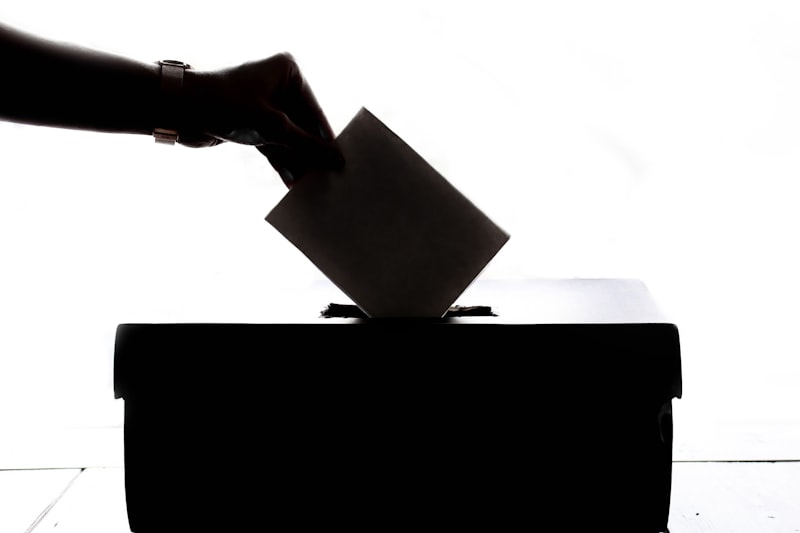
Medical cannabis laws had carved out exceptions to prohibition. They rested on the claim that cannabis was medicine and that patients had a right to access it. Colorado's Amendment 64 and Washington's Initiative 502 made no such claim. They argued that cannabis prohibition itself was the problem — that it was more harmful than the drug it targeted, that it wasted criminal-justice resources, that it generated hypocrisy, and that cannabis should be regulated like alcohol. The framing was deliberate and effective: "Regulate Marijuana Like Alcohol" became the bumper sticker and the ballot argument.
Colorado: Amendment 64
Colorado Amendment 64 — November 6
Colorado voters approve Amendment 64 with 55.3% of the vote, authorizing the production, sale, and possession of cannabis for adults 21 and older. Colorado becomes the first state to legalize adult-use cannabis.
Amendment 64 passed with 55.3% of the vote in Colorado — a state that had already operated a robust medical cannabis program under Amendment 20 since 2000. The measure authorized adults 21 and older to possess up to one ounce of cannabis, grow up to six plants at home, and purchase cannabis from state-licensed retail stores. It directed the Colorado General Assembly to establish a regulatory framework and imposed an excise tax on wholesale cannabis transfers.
The campaign emphasized three arguments: tax revenue for public schools, reduced criminal-justice costs, and the moral argument that prohibition punished adults for a choice less harmful than legal alcohol. The revenue argument proved particularly effective in a state that had experienced significant budget pressures.
Washington: Initiative 502
Washington Initiative 502 — November 6
Washington voters approve Initiative 502 with 55.7% of the vote. Unlike Colorado, Washington does not permit home cultivation, creating a fully commercial model.
Initiative 502 passed with 55.7% in Washington. The law was more restrictive than Colorado's in several respects — notably, it did not permit home cultivation, creating a model that channeled all cannabis production through state-licensed commercial operations. The campaign was led by New Approach Washington and built a coalition that included former federal prosecutors, law enforcement officials, and public health advocates. The impaired-driving provisions, which set a per se THC blood limit of 5 ng/mL, were controversial within the reform movement but helped neutralize law enforcement opposition.
The federal response
The constitutional question was immediate: two states had legalized an activity that remained a federal felony under the Controlled Substances Act. The Justice Department could have sued to preempt the state laws. It could have directed U.S. Attorneys to prosecute state-licensed cannabis businesses. It could have filed injunctions to prevent the states from implementing their regulatory frameworks.
It did none of these things. President Obama, asked about the votes shortly after the election, said it would "not make sense" for the federal government "to go after recreational users in states that have determined that it's legal." The statement was not a legal position — it was a political signal that the administration would not intervene, at least for now. The Cole Memo, issued eight months later in August 2013, formalized that restraint into prosecutorial guidance.
First sales
Colorado opens retail sales — January 1
Colorado becomes the first jurisdiction in the modern world to open licensed retail cannabis stores for adult use. Lines stretch around the block at dispensaries in Denver.
Washington opens retail sales — July 8
Washington state opens its first licensed retail cannabis stores, six months after Colorado. Supply shortages drive initial prices above $25 per gram.
Colorado opened the first licensed retail cannabis stores on January 1, 2014. Lines stretched around the block at dispensaries in Denver. Television cameras broadcast images of ordinary adults — not activists, not patients, not counterculture figures — legally purchasing cannabis from regulated retail stores. The sky did not fall. Traffic accidents did not spike. The social fabric did not unravel. The experiment had begun.
Washington followed on July 8, 2014. Initial supply was constrained — the licensing process had not produced enough cultivation capacity to meet demand — and prices were high, sometimes exceeding $25 per gram at retail. But the system functioned. Regulators regulated. Retailers sold. Customers bought. Taxes were collected.
What it meant
Colorado and Washington demonstrated something that no amount of polling data, economic modeling, or policy analysis could have established: that a state could legalize cannabis for adult use, regulate it commercially, tax it, and not descend into chaos. The evidence from the first years of legal sales was not uniformly positive — impaired-driving enforcement remained challenging, youth prevention messaging required investment, and the illicit market did not disappear overnight. But the catastrophic outcomes that prohibition defenders had predicted did not materialize.
The political effect was immediate. Within two years, Oregon, Alaska, and the District of Columbia had followed. Within four years, California, Massachusetts, Nevada, and Maine joined. The 2012 votes did not end prohibition. They proved it could be ended — and that the voters who ended it would not regret it enough to reverse course.
For in-depth cannabis education, dosing guides, safety information, and research summaries, visit our partner site TryCannabis.org