
Jack Herer (1939–2010) — The Hemperor
A Goldwater Republican sign-maker who tried cannabis after a divorce, wrote the most influential book in hemp advocacy history from jail, ran for president twice, and had a cannabis strain named after him. Dead on Tax Day.
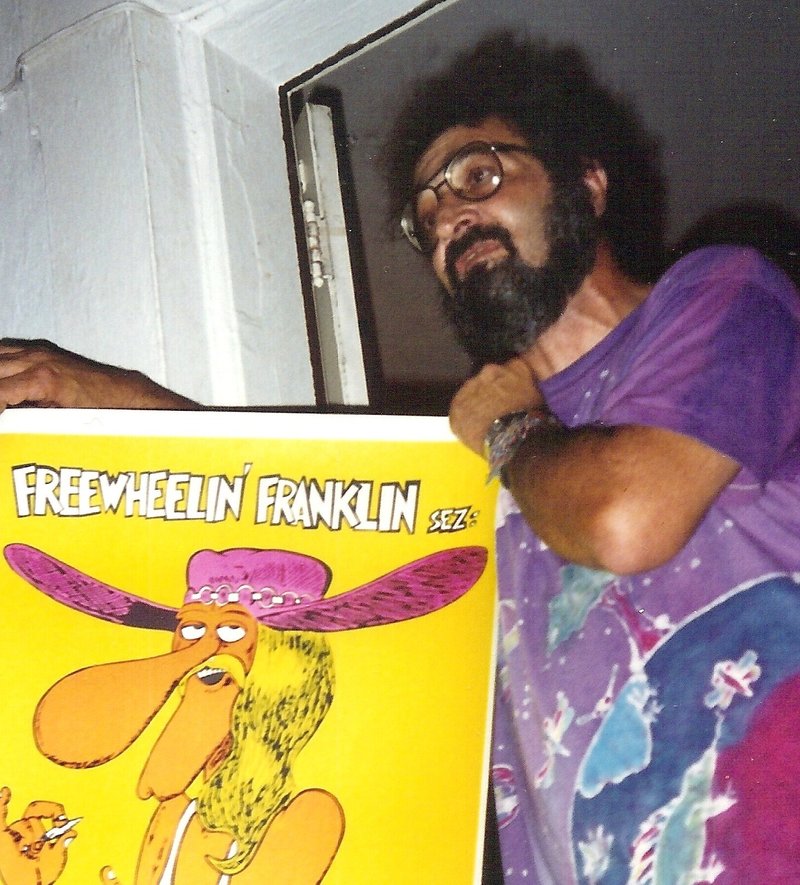
Born in New York City
Jack Herer is born in New York City. He is raised in Buffalo, New York.
Jack Herer's biography is improbable in almost every particular. He served in the United States Navy. He was a Barry Goldwater Republican. He ran a sign-making business. Nothing in his early life suggested that he would become the most famous cannabis activist in American history — the man they called the Hemperor.
The conversion
Herer first tried cannabis around 1967, after a divorce. The experience was transformative in the way that conversion experiences often are for people who become crusaders. By 1973, he had opened the Ah Ha Pipe Company and was publishing GRASS, a pro-cannabis zine. By 1979, he and Ed Adair operated a hemp shop on Venice Beach in Los Angeles. The Goldwater Republican had become a full-time hemp evangelist.
The Emperor Wears No Clothes
<em>The Emperor Wears No Clothes</em> published
Herer self-publishes the book that will define his legacy — reportedly completed while in jail. The book argues that hemp is a suppressed miracle crop, eliminated by a conspiracy among Hearst, DuPont, and the Mellons. It offers a $100,000 reward to anyone who can prove its claims wrong.
The book was self-published, reportedly completed while Herer was incarcerated. It argued that hemp could replace paper, fuel, textiles, building materials, and food — and that it had been suppressed by a corporate conspiracy to protect competing industries. Herer offered a standing $100,000 reward to anyone who could disprove his claims.
The book's influence is difficult to overstate. It became the foundational text of the hemp movement. Herer eventually released it to the public domain, allowing it to be freely copied and distributed. Millions of copies have circulated. For a generation of cannabis activists, The Emperor Wears No Clothes was the book that started everything.
The book's specific claims are evaluated individually elsewhere on this site. Some are documented history. Some are myth. Some are somewhere in between. What is beyond dispute is the book's cultural impact.
Hemp for Victory rediscovery
Herer and Farrow donate Hemp for Victory to the Library of Congress
Jack Herer, Maria Farrow, and Carl Packard locate copies of the 1942 USDA film "Hemp for Victory" and donate two VHS copies to the Library of Congress — the institution that had previously denied the film existed.
The Hemp for Victory rediscovery is one of Herer's unambiguous achievements. The federal government had denied the film existed. Herer and Maria Farrow did the archival work, found the copies, and forced the institutional record to acknowledge a document it had quietly forgotten.
Presidential campaigns
Herer ran for president of the United States twice on the Grassroots Party ticket. The campaigns were symbolic rather than competitive, but they gave Herer a platform to advocate for hemp legalization at a national level. The spectacle of a former Goldwater Republican running for president on a cannabis platform captured something essential about the improbability of Herer's entire career.
The Jack Herer strain
Jack Herer strain wins Cannabis Cup
Ben Dronkers of Sensi Seeds breeds a sativa-dominant strain named after Herer. The Jack Herer strain wins the High Times Cannabis Cup in 1994 and becomes one of the most famous cannabis cultivars in the world. Few activists in any field have had a product named after them during their lifetime.
Final speech and death
Heart attack at Portland Hempstalk
Herer suffers a massive heart attack after delivering a speech at the Portland Hempstalk festival in Oregon. He survives but never fully recovers.
Dies in Eugene, Oregon
Jack Herer dies at age 70 in Eugene, Oregon. His son Mark noted that it was fitting he died on Tax Day — April 15. The man who spent his life fighting the legacy of the Marihuana Tax Act died on the day Americans file their taxes.
Assessment
Herer once said: "I don't know if hemp is going to save the world, but it's the only thing that can." The statement captures both his power and his limitation — the visionary conviction that inspired a movement, and the tendency toward overstatement that weakened his credibility on specifics.
This site treats Herer as a useful but fallible source. His instincts about institutional incentives were often sharper than his evidence. His identification of hemp as a suppressed industrial crop was vindicated by the 2018 Farm Bill and the commercial hempcrete market. His specific claims about the Declaration of Independence, Ford's hemp car, and other details range from overstated to false. The honest assessment is that he got the big picture approximately right while getting many specifics wrong — and that the movement he built succeeded in changing federal law, whatever the scholarly limitations of his book.
For in-depth cannabis education, dosing guides, safety information, and research summaries, visit our partner site TryCannabis.org