Emperor Wears No Clothes — Herer's Hemp Paper Thesis
Jack Herer's Emperor Wears No Clothes made sweeping claims about hemp's industrial potential. Some are documented history. Some are myth. Some are somewhere in between. Claim by claim.
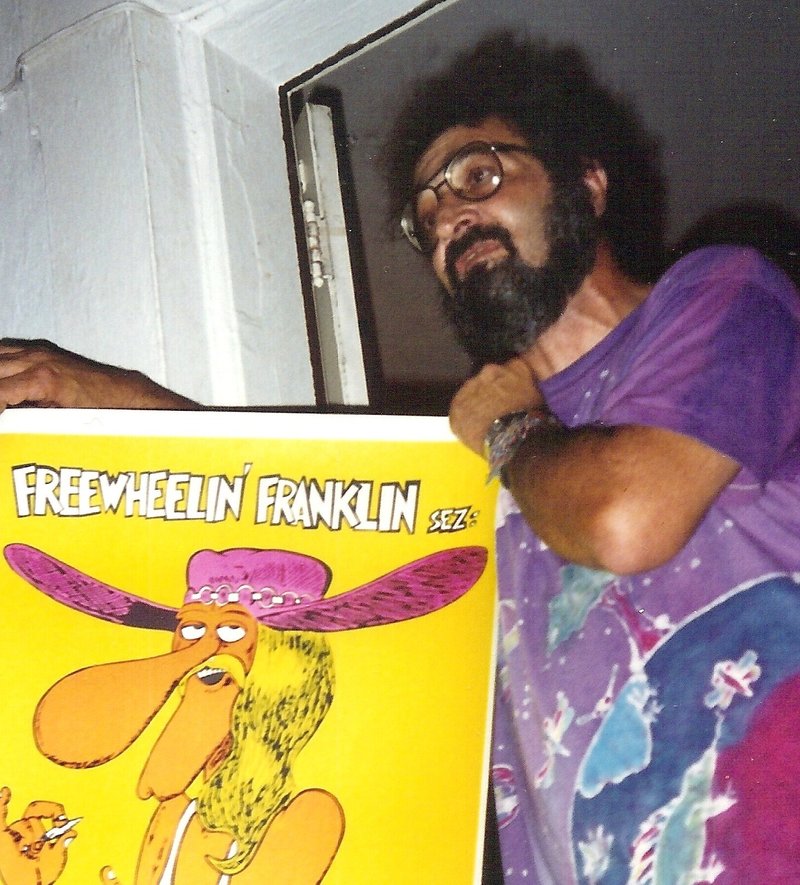
Jack Herer's 1985 book The Emperor Wears No Clothes argued that hemp was a suppressed miracle crop — capable of replacing paper, fuel, textiles, building materials, and food. The book has been enormously influential, and Herer released it to the public domain so it could spread freely. Four decades on, some of his claims have been vindicated by the market. Others were always overstated. The honest approach is to take them one at a time.
Paper: the Declaration and Constitution
Herer's broader claim about hemp paper has a real basis, however. The Gutenberg Bible (c. 1455) was partly printed on hemp-linen rag paper — this is genuine and documented. Hemp rag stock was a standard papermaking material in Europe for centuries. The specific claim about America's founding documents is false; the general claim about hemp's role in the history of paper is not.
Rope and sail
This claim is uncontested. European navies depended on hemp rope and hemp canvas for centuries. A single warship required 50 to 100 tons of hemp. The word "canvas" derives from "cannabis." The British Navy's dependence on Russian hemp shaped international diplomacy. No serious historian disputes hemp's role in the age of sail.
"Canvas" from "cannabis"
The etymological connection between "canvas" and "cannabis" is accepted by most standard dictionaries and is not controversial among linguists. This is one of Herer's claims that requires no qualification.
Fuel: hemp biomass
Herer argued that hemp could replace fossil fuels. The chemistry is real — hemp biomass can be converted to ethanol and biodiesel through standard processes. But the claim that hemp fuel would be revolutionary overstates the case. Hemp falls in the same neighborhood as other energy crops (switchgrass, corn, sugarcane) in terms of energy yield per acre. It is a possible biofuel feedstock, not a uniquely superior one.
Building: hempcrete
This is a claim that time has vindicated. When Herer wrote in 1985, hemp building materials were theoretical. By 2026, hempcrete — a composite of hemp hurd, lime, and water — is a commercial building material used in the UK, France, Belgium, and the United States. It is not load-bearing, but it provides excellent insulation and thermal mass. Hempcrete is now included in building codes as of 2026. Herer was early, not wrong.
Food: hempseed protein
Hempseed is a complete protein containing all nine essential amino acids. It has a favorable omega-6 to omega-3 fatty acid ratio. Hempseed contains negligible THC. These are documented nutritional facts, not activist claims. The food case for hemp is solid and does not require exaggeration.
Ford's "hemp car"
Herer rebranded this as the "hemp car," which overstates what the archival record supports. It was a soybean car that may have contained some hemp fiber among several plant materials. Ford was genuinely interested in agricultural plastics, and the concept of plant-fiber composites in automotive manufacturing has proven viable — modern cars use hemp fiber in door panels and dashboards. But the specific claim that Ford built a hemp car is a simplification that the primary sources do not support.
The pattern
What emerges from a claim-by-claim analysis is not a simple verdict of "right" or "wrong." Herer's instincts about hemp's industrial potential were often better than his evidence. His claims about rope, canvas, etymology, food, and building materials range from uncontested to vindicated. His claims about paper, fuel, and Ford's car range from overstated to false in their specific details while containing kernels of legitimate history.
The honest assessment is that The Emperor Wears No Clothes is a useful but fallible source — an activist manifesto that got the big picture approximately right while getting many specific claims wrong. It should be read as advocacy literature, not as scholarship, and its individual claims should be verified against the primary record. That is what this site attempts to do.
For in-depth cannabis education, dosing guides, safety information, and research summaries, visit our partner site TryCannabis.org