
Nixon & Marijuana — CSA 1970 & Shafer Commission
The Controlled Substances Act, Schedule I as "temporary," the Shafer Commission buried, the tapes. Nixon's drug war was designed to criminalize dissent. His own words prove it.
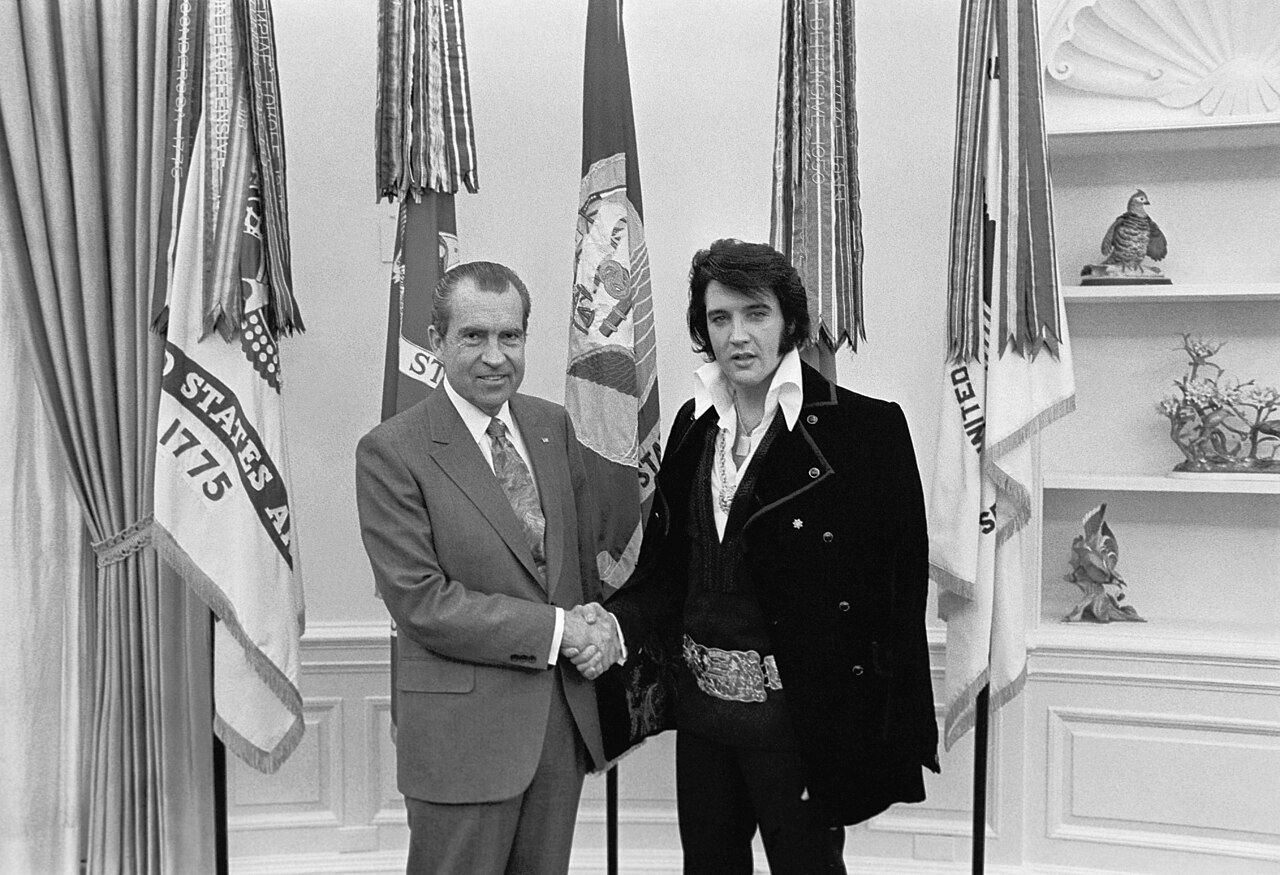
Richard Nixon did not invent American drug prohibition — Harry Anslinger and the Boggs Act preceded him by decades. What Nixon did was transform drug policy from a law-enforcement matter into a political weapon, deploying the machinery of the federal government against domestic constituencies he regarded as enemies. We know this because he said so, on tape, in his own voice, in conversations he did not know were being recorded.
The Controlled Substances Act
Controlled Substances Act signed (Pub. L. 91-513)
Nixon signs the Comprehensive Drug Abuse Prevention and Control Act of 1970, which includes the Controlled Substances Act. The law creates the five-schedule classification system that governs federal drug policy to this day. Marijuana is placed in Schedule I: "no currently accepted medical use" and "high potential for abuse."
Schedule I — the most restrictive classification — was not supposed to be permanent for marijuana. On August 14, 1970, Assistant Secretary of Health Roger Egeberg wrote to Congress recommending Schedule I placement "at least until the completion of certain studies now underway." The placement was explicitly framed as temporary, pending the findings of a commission Nixon himself would appoint.
The Shafer Commission
Shafer Commission appointed
Nixon appoints a bipartisan commission chaired by former Pennsylvania Governor Raymond Shafer, a Republican, to study marijuana policy and recommend a federal approach. The commission includes members of Congress, medical professionals, and public officials.
Nixon chose Shafer precisely because he expected a loyal Republican to deliver the conclusions the administration wanted. He was explicit about this expectation. In a recorded conversation on September 9, 1971, Nixon told Shafer directly: "Keep your commission in line." The president was not requesting an independent inquiry. He was issuing instructions.
"Marihuana: A Signal of Misunderstanding" released
The Shafer Commission publishes its final report. After extensive research, testimony, and analysis, the commission concludes that marijuana should be decriminalized for personal use.
The report's findings were unambiguous. "Neither the marihuana user nor the drug itself can be said to constitute a danger to public safety," the Commission wrote (p. 78). On the gateway theory that Anslinger had invented two decades earlier: "No verification of a causal relationship between marihuana use and the subsequent use of other drugs has been produced" (p. 61). The Commission recommended decriminalizing possession of marijuana for personal use (p. 151).
Nixon refused to read the report. He rejected its recommendations publicly, and the temporary Schedule I classification that Egeberg had recommended "at least until" the Commission reported became, by presidential fiat, permanent.
The tapes
Nixon's secret White House taping system captured conversations that reveal the racial and political motivations behind his drug policy with a candor that no subsequent president has matched.
Haldeman's own diary entries corroborate the racial dimension of Nixon's drug policy. In entries related to drug-enforcement strategy, Haldeman recorded Nixon's view that "the whole problem is really the blacks." The war on drugs was not a response to a drug epidemic. It was a mechanism for targeting populations the administration considered politically hostile.
The Ehrlichman confession
The most direct statement of purpose came from John Ehrlichman, Nixon's domestic policy chief, in a 1994 interview with journalist Dan Baum. Baum published the quote in Harper's Magazine in April 2016:
"The Nixon campaign in 1968, and the Nixon White House after that, had two enemies: the antiwar left and black people. You understand what I'm saying? We knew we couldn't make it illegal to be either against the war or black, but by getting the public to associate the hippies with marijuana and blacks with heroin, and then criminalizing both heavily, we could disrupt those communities. We could arrest their leaders, raid their homes, break up their meetings, and vilify them night after night on the evening news. Did we know we were lying about the drugs? Of course we did."
Ehrlichman's family disputed the quote after his death. Baum stood by it, noting that he had recorded the interview. And the White House tapes — recorded by Nixon's own system, in Nixon's own voice — corroborate the framework Ehrlichman described: a drug policy designed not to protect public health but to neutralize political opposition.
The architecture of criminalization
What Nixon built was more durable than any single law. The Controlled Substances Act created a scheduling system that concentrated enormous power in the executive branch. Schedule I placement — which Nixon imposed over the objections of his own commission — made marijuana research nearly impossible, because researchers needed a Schedule I license to study a Schedule I substance. The classification justified itself: marijuana had no accepted medical use because the classification prevented the research that might establish one.
The Shafer Commission represented the last moment when the federal government conducted an honest, publicly funded inquiry into marijuana and followed the evidence to its logical conclusion. Every subsequent federal commission, task force, or study has operated within the political constraints that Nixon established when he buried Shafer's report. The evidence has not changed. The political calculation has not permitted acknowledging it.
For in-depth cannabis education, dosing guides, safety information, and research summaries, visit our partner site TryCannabis.org