
Weaponization of "Marihuana" — A Word Did the Work
"We cannot understand yet, Mr. Chairman, why this bill should have been prepared in secret for two years without any intimation, even, to the profession, that it was being prepared." — Dr. William C. Woodward, AMA, May 4, 1937
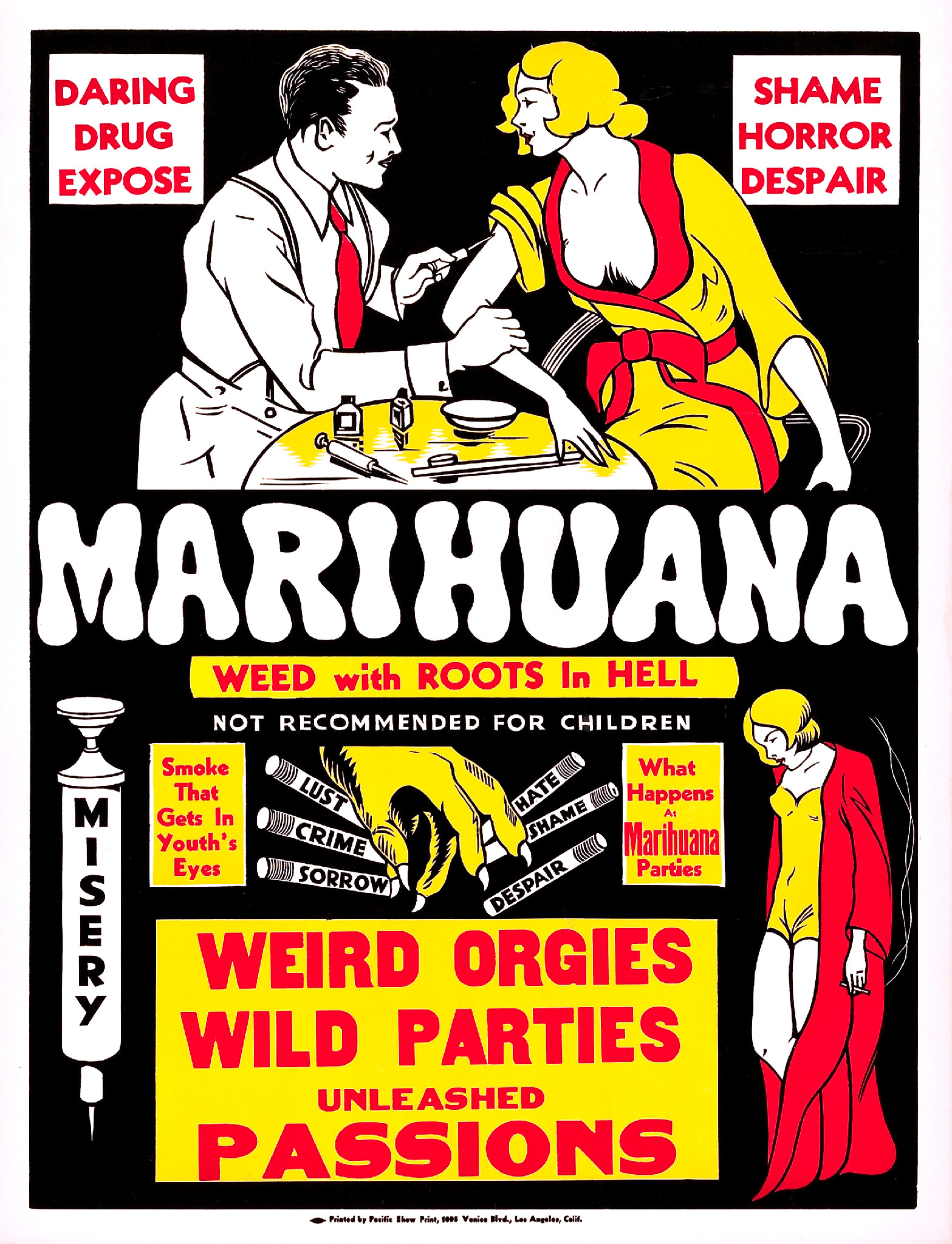
For nearly a century, the American medical establishment used the term Cannabis indica. Physicians prescribed it. Pharmacists compounded it. The U.S. Pharmacopoeia listed it. Then, in the 1930s, federal officials chose to call it "marihuana" — and most of the medical profession did not realize they were talking about the same plant until it was too late.
This was not an accident of language. It was a rhetorical strategy with documented consequences.
Cannabis indica: the medical term
American and European medical literature had used "Cannabis indica" as the standard pharmaceutical term since the 1840s, following W. B. O'Shaughnessy's introduction of the drug to Western medicine from Bengal. By the early 20th century, hundreds of cannabis-containing medicines were manufactured and sold legally in the United States. Physicians knew the plant under its Latin name. Patients encountered it in tinctures and extracts bearing that name.
The term "cannabis" carried medical legitimacy. It appeared in professional journals, pharmacopoeias, and medical-school curricula. Whatever concerns existed about the drug's effects, they were discussed within a framework of clinical evaluation and professional regulation.
Marihuana: the newspaper term
The Spanish-derived term appeared in American newspapers from the 1890s, initially in reports from Mexico and the US-Mexico borderlands. After the Mexican Revolution of 1910 drove migration northward, usage exploded. By the mid-1910s, southwestern newspapers routinely used "marihuana" (or variant spellings: "marijuana," "mariguana," "mariahuana") in crime reporting that associated the drug with Mexican immigrants.
First US newspaper appearances
The Spanish term "marihuana" begins appearing in American press, primarily in dispatches from Mexico and border regions.
Usage explodes
The Mexican Revolution drives migration to the US Southwest; newspaper coverage of "marihuana" surges alongside anti-immigrant sentiment.
Federal adoption
The Federal Bureau of Narcotics, under Anslinger, consistently uses "marihuana" rather than "cannabis" in official communications, press releases, and proposed legislation.
The critical point is that "marihuana" and "Cannabis indica" were not recognized as the same substance by most of the American public — or, as events would prove, by much of the medical profession. The Spanish-derived term carried connotations of foreignness, criminality, and racial otherness. The Latin term carried connotations of medicine, science, and professional authority. Using one rather than the other was a choice with consequences.
Why "marijuana," not "marihuana"?
The split between the two spellings is a quirk of phonetic borrowing. In Spanish, the letter j is pronounced as a hard, throaty h — so "marijuana" and "marihuana" sound essentially the same to a Spanish speaker. Either spelling captures roughly the same word. Both appeared in American newspapers from the 1890s onward, occasionally within the same article, alongside variants like mariguana and mariahuana.
American popular usage gradually drifted toward the j form. By mid-century, "marijuana" had become the dominant spelling in English-language journalism, advertising, and most state-level legislation written after the Second World War — possibly because the j read as more emphatically foreign to anglophone eyes, or simply by the analogy of other anglicized Spanish borrowings.
The h spelling survived in one specific place: federal law. The 1937 statute was titled the Marihuana Tax Act and the spelling fossilized there. The Controlled Substances Act of 1970 retained "marihuana." The Code of Federal Regulations still uses it today. The result is a tripartite split that has persisted for nearly a century:
- Cannabis — the term of medicine, science, pharmacology, and the modern legal-reform vocabulary. Used in the U.S. Pharmacopoeia, in scientific journals, and in the names of most legalization-era organizations.
- Marihuana — the legal term in federal law and in many older state statutes that copied 1937 language verbatim.
- Marijuana — the popular American spelling in journalism, common usage, and most post-1970 state voter initiatives.
The persistence of all three is itself a small monument to how prohibition was designed: a single plant, named differently by the institutions that respectively studied it, criminalized it, and talked about it.
The racial subtext
The racial dimension of "marihuana" was not subtle, and it was not invented by later historians. Contemporary documents make it explicit.
The use of marihuana is not confined to the lower classes of Mexicans, but is found among the degenerate Spanish-speaking residents of the Southwest.
Floyd Baskette, letter to the Bureau of Narcotics, 1936
The 1934 US report to the League of Nations went further, claiming that "fifty per cent of all violent crimes committed in districts occupied by Mexicans, Turks, Filipinos, Greeks, Spaniards, Latin Americans, and Negroes may be traced to the use of marihuana." This figure had no empirical basis — no study supported it, no methodology produced it — but it entered the international record as an official US government assertion.
The racialization was not limited to Mexicans. Louisiana's 1924 ban was driven in part by concerns about cannabis use among Black populations in New Orleans. In the Northeast, newspaper accounts occasionally linked the drug to "Hindoos" and other South Asian immigrants. The common thread was foreignness — "marihuana" was cast as an alien substance brought by alien peoples, even as "Cannabis indica" sat on pharmacy shelves across the country.
Woodward's objection: "a mongrel word"
The most consequential moment in the weaponization of "marihuana" came during the congressional hearings on the Marihuana Tax Act. On May 4, 1937, Dr. William C. Woodward, the American Medical Association's legislative counsel, testified before the House Ways and Means Committee. His objection was precise and devastating:
The term "marihuana" is a mongrel word that has crept into this country over the Mexican border and has no general meaning, except as it relates to the use of Cannabis preparations for smoking. It is not recognized in medicine and common parlance as combating the use of Cannabis.
Dr. William C. Woodward, AMA legislative counsel, testimony before House Ways and Means Committee, May 4, 1937 (hearing transcript pp. 87–121)
Woodward's point was structural, not merely semantic. By titling the legislation the "Marihuana Tax Act" rather than a "Cannabis Tax Act," the Bureau of Narcotics had ensured that the bill would not trigger automatic review by the AMA's pharmacological committees, which monitored legislation affecting recognized drugs. The word "marihuana" did not appear in the medical indices. It did not appear in the Pharmacopoeia. A physician scanning legislative bulletins for threats to medical practice would not recognize it.
Woodward was not speculating about this effect — he was describing what had already happened. The AMA had not been consulted during the two years the bill was drafted. The medical profession had been blindsided, and the obscure terminology was part of the reason.
The deliberate obscurity
Whether the terminological confusion was intentional on the part of the Bureau of Narcotics or merely convenient is debated by historians. What is not debated is that the Bureau consistently chose "marihuana" over "cannabis" in every public-facing communication, press release, and legislative proposal. The Bureau was aware that medical professionals used "cannabis." The Bureau chose not to.
The effect was measurable. When the Tax Act passed in August 1937, pharmaceutical companies that had been manufacturing cannabis-containing medicines were caught off guard. Some did not realize until the law took effect on October 1 that the "marihuana" tax applied to their "cannabis" products. The American Medical Association — the largest professional medical organization in the country — had sent one representative to object, and his objection was overridden by a lie on the House floor.
Legacy
The terminological split persists. Federal law still uses "marihuana" (with an "h") — a spelling that appears in no Spanish dictionary and exists primarily as a legal artifact of the 1937 act. Most state laws adopted the same spelling. Medical and scientific literature never stopped using "cannabis."
The word did not cause prohibition. Racialized moral panic, bureaucratic ambition, and political indifference did that. But the word made it easier. It severed the public discussion from the medical one. It made a familiar pharmacy product sound foreign and dangerous. And it ensured that the one professional organization with the authority and credibility to stop the Tax Act — the AMA — did not fully understand what was happening until the bill was already on the House floor.
For in-depth cannabis education, dosing guides, safety information, and research summaries, visit our partner site TryCannabis.org