
Prop 215 (1996) — CA Medical, Peron & Brownie Mary
A gay Vietnam veteran who smuggled cannabis home in his duffel bag, a 68-year-old brownie baker, and the AIDS epidemic. On November 5, 1996, California voters passed Proposition 215 with 55.6% of the vote and cracked federal prohibition open from inside a state ballot box.
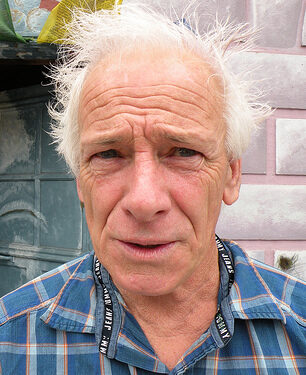
Proposition 215 — the Compassionate Use Act — was the simplest major drug law in American history. Its operative text fit on a single page. A patient with a physician's recommendation could possess and cultivate marijuana for medical use. No licensing framework. No dispensary regulations. No quantity limits. No qualifying-condition list. The law said almost nothing about how medical cannabis would work in practice, and that deliberate vagueness was both its genius and its curse.
Dennis Peron and the Cannabis Buyers Club
The law's principal author was Dennis Peron, a Vietnam veteran who had been openly selling cannabis out of his home on Castro Street since the 1970s. Peron watched his partner Jonathan West die of AIDS in 1990 and channeled that grief into political action. In 1991, he co-authored Proposition P, a San Francisco ballot measure declaring that the city would not prosecute medical cannabis use. It passed with 79% of the vote — a local advisory measure with no legal force, but a clear signal of where the city stood.
Peron opened the San Francisco Cannabis Buyers Club at 1444 Market Street. By the mid-1990s it had more than 8,000 members, most of them AIDS and cancer patients. Dr. Tod Mikuriya served as medical coordinator, screening patients and maintaining records. Mary Jane Rathbun — Brownie Mary — baked hundreds of cannabis brownies a week for patients who could not smoke. The club operated in full public view, daring the authorities to shut it down.
Writing the initiative
Proposition 215 was drafted by a coalition that spanned the California cannabis reform movement. Peron and Mikuriya wrote the core language. Valerie Corral, who grew cannabis for her own epilepsy and ran WAMM (Wo/Men's Alliance for Medical Marijuana) in Santa Cruz, contributed the patient-caregiver framework. Dale Gieringer of California NORML, attorney Bill Panzer, medical cannabis advocate Scott Imler, nurse Anna Boyce, John Entwistle, and Leo Paoli rounded out the drafting team.
The deliberate simplicity of the text was strategic. A physician's recommendation — not a prescription, which would have triggered federal Controlled Substances Act conflicts — was the only gateway. The law codified its provisions in California Health and Safety Code Section 11362.5 and left everything else to future interpretation.
Funding and the national network
The campaign was funded substantially by three donors from outside California's cannabis community: financier George Soros, insurance executive Peter Lewis, and money manager John Sperling, each contributing roughly $500,000. Ethan Nadelmann, then running the Lindesmith Center (later the Drug Policy Alliance), organized the national fundraising strategy. The total campaign budget exceeded what any previous drug reform initiative had assembled.
The Lungren raid
AG Lungren raids Cannabis Buyers Club — August 4
California Attorney General Dan Lungren orders a raid on Dennis Peron's Cannabis Buyers Club at 1444 Market Street in San Francisco. Agents seize approximately 40 pounds of cannabis. The political backlash helps propel Proposition 215 to victory three months later.
On August 4, 1996, three months before the election, Attorney General Dan Lungren raided the Cannabis Buyers Club. Agents seized roughly 40 pounds of cannabis. Lungren expected the raid to demonstrate that the club was a front for recreational use. Instead, television cameras captured agents confiscating medicine from visibly ill patients — people in wheelchairs, people with Kaposi's sarcoma lesions, people who weighed 90 pounds. The political backlash was immediate and sustained. Lungren had given the Yes on 215 campaign the single most powerful image it could have asked for.
The vote
Proposition 215 passes — November 5
California voters approve the Compassionate Use Act: 5,382,915 in favor (55.6%) to 4,301,960 against (44.4%). California becomes the first state to legalize medical cannabis in the modern era.
On November 5, 1996, Proposition 215 passed with 5,382,915 votes in favor and 4,301,960 against — a margin of 55.6% to 44.4%. California had enacted the first state medical cannabis law in the modern era. The Compassionate Use Act took effect immediately.
The federal response
Federal officials threaten physicians — December 30
Drug czar Barry McCaffrey, HHS Secretary Donna Shalala, Attorney General Janet Reno, and Treasury Secretary Robert Rubin announce that physicians who recommend cannabis may have their DEA registrations revoked and face exclusion from Medicare and Medicaid.
The federal government responded with open hostility. On December 30, 1996, drug czar Barry McCaffrey, HHS Secretary Donna Shalala, Attorney General Janet Reno, and Treasury Secretary Robert Rubin held a joint press conference. They threatened to revoke the DEA registrations of any physicians who recommended cannabis — effectively ending their ability to prescribe any controlled substance and destroying their medical practices.
The threat was constitutionally untenable. A group of physicians and patients sued, and in Conant v. Walters, 309 F.3d 629 (9th Cir. 2002), the Ninth Circuit held that the First Amendment protected physician-patient communication about cannabis. The government could not punish doctors for recommending a legal state therapy. The federal threat collapsed, but it had accomplished its short-term goal: for years, many physicians refused to issue recommendations out of fear.
Conant v. Walters, 309 F.3d 629 (9th Cir. 2002)
Ninth Circuit Court of Appeals
What Prop 215 did not do
Proposition 215 created a right without a system. It authorized medical cannabis but established no licensing for growers, no regulations for dispensaries, no testing requirements, no tax structure, and no enforcement mechanism. For nearly two decades, California's medical cannabis market operated in a regulatory vacuum. Cities and counties were left to craft their own rules — or to ban dispensaries entirely.
The state did not pass comprehensive medical cannabis regulations until the Medical Marijuana Regulation and Safety Act in 2015, nearly twenty years after Prop 215. By then, an entire unregulated industry had grown in the gap, and many of its participants would not survive the transition to the regulated market that Proposition 64 created in 2016.
Legacy
Every medical cannabis law that followed — Oregon and Washington in 1998, Alaska in 1998, Maine in 1999, Colorado and Hawaii in 2000, and the cascade that produced 40 state medical programs by 2026 — traced its lineage to Proposition 215. The law demonstrated that a state could defy federal scheduling through the ballot box and survive. It proved that voters would support medical cannabis when the question was framed around patients rather than policy abstractions. And it established the template — physician recommendation rather than prescription, state law operating in defiance of federal classification — that every subsequent state medical program would adopt.
Dennis Peron died on January 27, 2018, in San Francisco. He spent his final years giving cannabis away to patients who could not afford it from the legal dispensaries that existed because of the law he wrote.
For in-depth cannabis education, dosing guides, safety information, and research summaries, visit our partner site TryCannabis.org