Ancient & Pre-Modern Cannabis — Origins Through 1800
From the Neolithic steppes of Central Asia to the tobacco plantations of colonial Virginia — twelve millennia of cannabis before anyone thought to ban it.
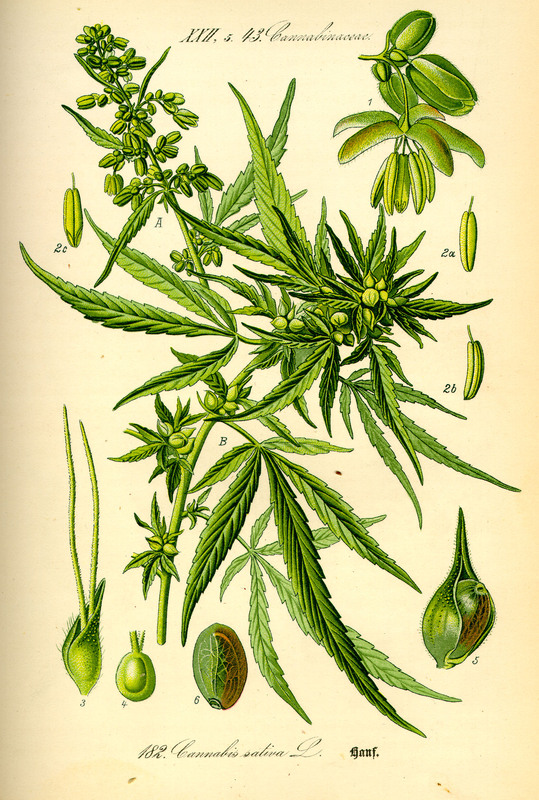
Cannabis (Cannabis sativa L.) is one of humanity's oldest cultivated plants. Archaeological evidence places hemp fiber use in Neolithic China roughly 7,000 years ago, and cord-impressed pottery from Taiwan suggests still earlier cultivation. But the story of cannabis before 1800 is not one story — it is at least six, spanning continents and millennia, and popular retellings have tangled documented history with activist mythology and prohibitionist propaganda alike.
This section recovers what the primary sources support and identifies what they do not.
The chapters
China
Hemp textiles, Han-dynasty paper, the Shennong Bencaojing, and why the "2737 BCE" date is legendary. The Jirzankal braziers and what gas chromatography actually found.
Read →India
The Atharva Veda's bhaṅga, the bhang-ganja-charas typology, the Indian Hemp Drugs Commission of 1894, Shiva as "Lord of Bhang," and the Soma question.
Read →Islamic World
Ibn al-Baytār, Sufi hashish, Ottoman bans, Rosenthal's The Herb — and why the Assassin legend (Hassan-i Sabbah drugging disciples) is almost certainly false.
Read →Africa
Indian Ocean trade routes, the Bashilenge "cult of riamba," dagga in southern Africa, and Chris Duvall's argument that the word "marijuana" derives from Bantu languages.
Read →Renaissance Europe
50–100 tons of hemp per warship. Henry VIII's 1533 mandate. The Spanish Armada. "Canvas" from "cannabis." And why the Gutenberg Bible claim is false.
Read →Colonial America
Jamestown 1611, Virginia hemp mandates, Washington's diaries, Jefferson's hemp brake — and the systematic debunking of the "founding fathers smoked it" claims.
Read →Key dates
Neolithic hemp textiles
Cord-impressed pottery from Taiwan and hemp textile fragments from the Yangshao culture of northern China establish hemp as one of humanity's earliest cultivated fibers.
Jirzankal Cemetery — first confirmed psychoactive use
Meng Ren et al. (Science Advances, 2019) identify cannabinol on wooden braziers from tombs in the eastern Pamirs, confirming deliberate selection of high-THC cannabis for funerary ritual.
Atharva Veda names bhaṅga
The earliest Vedic reference to cannabis as one of five sacred plants. The first uncontested Indian medical reference is 11th-century.
Ibn al-Baytār describes hashish
The Andalusian botanist documents qinnab hindī and Sufi hashish use in Cairo in his Kitāb al-Jāmi'.
Henry VIII mandates hemp cultivation
24 Henry VIII c. 4 requires English landowners to sow one-quarter acre of hemp per sixty acres of tilled land.
Jamestown hemp cultivation begins
The Virginia Company orders hemp experiments at Jamestown. The 1619 General Assembly instructs every householder to "make trial" of hemp seed.
For in-depth cannabis education, dosing guides, safety information, and research summaries, visit our partner site TryCannabis.org