Cannabis in the 19th Century — Medicine, Industry & Culture
The century Western medicine discovered cannabis, Kentucky built an economy on it, and hashish parlors flourished in Gilded Age New York — before racial panic recast it all as criminal.
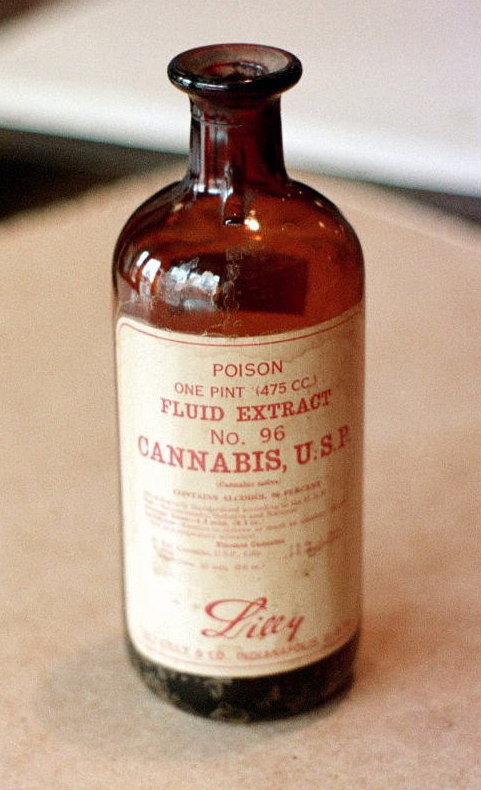
Between 1800 and 1900, cannabis occupied a position in Western civilization almost unrecognizable from the one it holds today. It was a legitimate medicine listed in the U.S. Pharmacopoeia, produced by firms like Parke-Davis and Eli Lilly, prescribed by physicians from London to Calcutta. It was an agricultural commodity that made Kentucky the hemp capital of the world — on the backs of enslaved laborers. It was an underground pleasure consumed in Turkish-style hashish parlors on Broadway. And it was a literary subject treated with the same seriousness as opium by the best writers of the era.
All of this was legal.
The chapters
O'Shaughnessy
The Irish physician who tested cannabis on animals and infants in colonial Calcutta in 1839, brought specimens to Kew, and launched Western cannabis therapeutics.
Read →The Pharmacopoeia
The USP listed cannabis from 1850 to 1942. Parke-Davis, Eli Lilly, Grimault's asthma cigarettes, 2,000+ cannabis medicines — and the Queen Victoria myth debunked.
Read →Kentucky Hemp
40,000 tons at the 1850 peak, built on enslaved labor. Henry Clay's Ashland, the cotton gin connection, and how Emancipation destroyed the industry's labor model.
Read →Hashish Parlors
H. H. Kane's 1883 Harper's account of a New York hashish house, the "500 parlors" claim examined, and the 1876 Centennial Exposition.
Read →Fitz Hugh Ludlow
The Hasheesh Eater (1857): six cents for an excursion ticket over all the earth. The first American literary treatment of cannabis consciousness.
Read →Mexico & Jamaica
Spanish imperial hemp, Jamaica's Indian indentured laborers, Mexico's 1920 ban — and how cannabis crossed the Rio Grande into the American Southwest.
Read →Key dates
O'Shaughnessy's landmark paper
William Brooke O'Shaughnessy reads "On the Preparations of the Indian Hemp, or Gunjah" before the Medical and Physical Society of Calcutta — the foundational document of Western cannabis therapeutics.
Cannabis arrives in Jamaica
The SS Blundell Hunter docks at Old Harbour Bay carrying the first Indian indentured laborers, who bring the Hindi word gāñjā and the practice of cannabis smoking.
Cannabis enters the US Pharmacopoeia
Extractum Cannabis is admitted to the USP third edition. It will remain until removal in 1942.
Kentucky hemp peaks at ~40,000 tons
Kentucky alone supplies more than half the national total, valued at $5 million, built on enslaved labor.
The Hasheesh Eater published
Fitz Hugh Ludlow publishes the first substantial American literary account of cannabis intoxication, aged 21.
Kane describes a New York hashish house
H. H. Kane's Harper's article documents upper-class hashish culture in Gilded Age Manhattan.
Indian Hemp Drugs Commission Report
The most comprehensive cannabis study of the 19th century — seven volumes codifying bhang, ganja, and charas traditions.
For in-depth cannabis education, dosing guides, safety information, and research summaries, visit our partner site TryCannabis.org