Beat Generation Cannabis & the 1960s Revolution
Ginsberg picketed for legalization. Leary fought to the Supreme Court. The Grateful Dead got arrested at 710 Ashbury. Cannabis became the counterculture's sacrament — and its legal lightning rod.
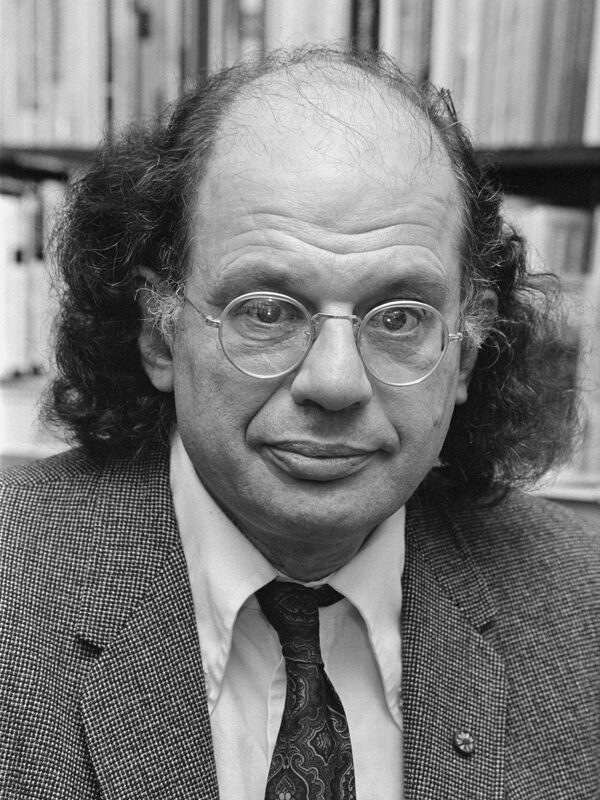
The American counterculture of the 1950s and 1960s did not invent cannabis use in the United States — jazz musicians, Mexican-American communities, and bohemian enclaves had sustained it for decades. What the counterculture did was make cannabis visible, literary, and political. A drug that the Boggs Act had buried under mandatory minimums became, within a single generation, a symbol of dissent, a subject of Supreme Court litigation, and the soundtrack of a cultural revolution.
The Beats: cannabis enters American literature
Allen Ginsberg's <em>Howl</em> published
City Lights Books publishes Howl and Other Poems. The poem's frank depictions of drug use and sexuality make it an immediate target.
US Customs seizes 520 copies of <em>Howl</em>
Customs agents confiscate 520 copies of Howl at the San Francisco port. Publisher Lawrence Ferlinghetti is arrested and charged with obscenity.
The trial that followed — People v. Ferlinghetti (1957) — became a landmark of American free-speech law. Judge Clayton Horn ruled that Howl was "not without redeeming social importance," establishing a standard that would echo through obscenity law for decades. The poem's references to drug use, including cannabis, were part of its protected expression. The government had tried to suppress a poem and instead made it famous.
Jack Kerouac's On the Road, published the same year, wove cannabis through its narrative using the jazz slang "tea." William Burroughs pushed further with Junky and later Naked Lunch, blurring the line between drug memoir and experimental literature. Together, the Beats made drug use — and cannabis in particular — a subject that serious American writers could address without euphemism.
Ginsberg goes political
LeMar founded
Allen Ginsberg, Ed Sanders, and Randy Wicker found LeMar (Legalize Marijuana) in New York City — one of the first organized cannabis-legalization groups in American history.
On December 27, 1964, Ginsberg and his co-founders picketed in New York carrying signs reading "Pot Is a Reality Kick." The demonstration was tiny — a handful of poets and activists on a winter sidewalk — but it marked a shift from literary transgression to explicit political advocacy. Cannabis was no longer just a subject for poems. It was a cause.
Leary: from Harvard to the Supreme Court
Timothy Leary arrested at Laredo
Leary is arrested at the US-Mexico border in Laredo, Texas, for possession of marijuana. He is convicted under the Marihuana Tax Act and sentenced to 30 years.
Leary's Laredo arrest became the test case that destroyed the Marihuana Tax Act. The law required anyone possessing marijuana to register and pay a tax — but registering meant admitting possession of an illegal substance, which amounted to compelled self-incrimination. Leary's lawyers argued the case to the Supreme Court.
<em>Leary v. United States</em>, 395 U.S. 6
The Supreme Court rules unanimously that the Marihuana Tax Act violates the Fifth Amendment's protection against self-incrimination. Justice Harlan writes the opinion. The Tax Act — the legal foundation of federal marijuana prohibition since 1937 — is struck down.
The decision was unanimous. Justice John Marshall Harlan II, writing for the Court, held that the Tax Act's registration requirement forced possessors to incriminate themselves. The ruling did not legalize marijuana — Congress replaced the Tax Act with the Controlled Substances Act the following year — but it revealed that the legal architecture of prohibition had been constitutionally defective for thirty-two years.
The Summer of Love
Human Be-In, Golden Gate Park
An estimated 20,000-30,000 people gather in Golden Gate Park for the Human Be-In. Ginsberg, Leary, and Gary Snyder speak. Cannabis smoke is omnipresent. The event signals the emergence of the Haight-Ashbury counterculture as a national phenomenon.
The Summer of Love that followed — the mass migration of young people to San Francisco's Haight-Ashbury district in 1967 — made cannabis use simultaneously more visible and more normal. For the first time, marijuana was not the province of jazz musicians, poets, or border communities. It was being used openly, in daylight, by middle-class white college students. This demographic shift would ultimately matter more than any legal argument.
Grateful Dead arrested at 710 Ashbury
Police raid the Grateful Dead's communal house at 710 Ashbury Street in San Francisco. Band members and associates are arrested for marijuana possession. The band holds a press conference on the front steps the next day.
The Dead's arrest at 710 Ashbury was a media event as much as a law-enforcement action. The band's press conference the following day — held on the same front steps where they had been arrested — turned a drug bust into a platform. The message was not contrition but defiance: the laws were wrong, and everyone knew it.
The counterculture's paradox
The counterculture accomplished something that no legal strategy could have achieved alone: it made cannabis use culturally legible to mainstream America. Millions of young people tried marijuana, found that the government's warnings were absurd, and concluded — correctly — that they had been lied to. That credibility gap would poison public trust in drug-education programs for generations.
But the counterculture also handed prohibition's defenders a gift. By associating cannabis with radical politics, anti-war protest, sexual liberation, and challenges to authority, the movement made it easy to frame marijuana prohibition as a defense of social order rather than a question of pharmacology. Nixon understood this instinctively. The War on Drugs he launched in 1971 was, at its core, a war on the constituencies the counterculture represented.
For in-depth cannabis education, dosing guides, safety information, and research summaries, visit our partner site TryCannabis.org